A visit to Kyoto can begin with a word. In Japanese, nyūraku (入洛) and jōraku (上洛) both describe coming to the city. They share a character—洛, pronounced raku—that does not appear in the name Kyoto.
Following that character offers a different way into the city’s history, before you step inside a temple or open a guidebook.
Two words, one destination
Nyūraku means entering Kyoto; the same characters can also be read juraku. Jōraku describes travelling to Kyoto from elsewhere. Its first character conveys going “up” to the capital.[1][2]
The dictionaries also note that nyūraku is especially associated with people of high rank entering the capital.[1]
You do not need either expression to plan a trip. Knowing them can, however, make a historical explanation or a Japanese travel document more interesting to read.
Why does raku mean Kyoto?
The character 洛 is associated with Luoyang, a historic capital in China. Kanjipedia, published by the Japan Kanji Aptitude Testing Foundation, also records its use for Kyoto.[3]
Kanji scholar Tetsuji Atsuji explains that older poetry and prose compared Kyoto with the Chinese capitals Chang’an and Luoyang. A name connected with another capital became part of the language used for Kyoto itself.[4]
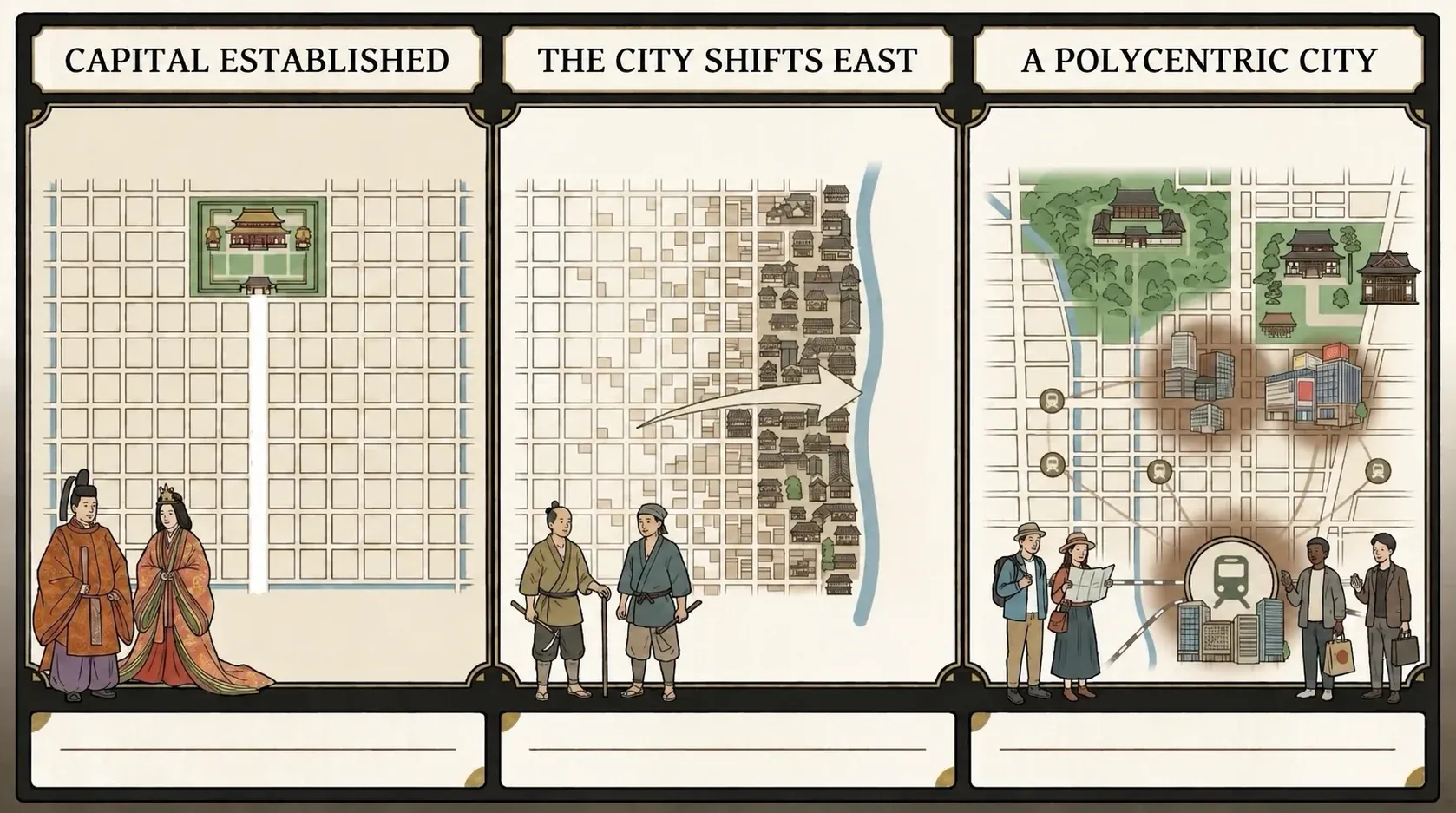
Kyoto City’s Kamigyo history guide describes the development of the eastern part of Heian-kyō, associated with Luoyang, while the western part, associated with Chang’an, declined. In that account, Luoyang became a name for the capital more broadly.[5]
This should not be read as a naming scheme fixed on the city’s very first day. Historian Masaaki Ueda examines how the names and their east–west associations took shape over time.[6]
A word still used today
Nyūraku is not confined to historical writing. Kyoto City uses it in the explanatory notes for its 2025 tourism survey, published in 2026. There it describes visits that include shopping, business and seeing friends, as well as sightseeing.[7]
That is a useful modern example of a word with a much older background. It does not mean that you are expected to use it in everyday conversation.
Look for 洛 as you explore
The character also appears in Rakuchū (洛中) and Rakugai (洛外). Atsuji explains these terms in the context of Rakuchū Rakugai-zu paintings as the urban area and its outskirts.[4]
The latter two should not be treated as a precise map of today’s administrative districts. The historical references gathered in Japan’s Collaborative Reference Database show that their scope has changed over time.[8]
You might enjoy noticing the character in a place name or a Japanese explanation, then looking it up when you return to your accommodation. For the changing shape of the city itself, explore our seven-map story of how Kyoto’s center moved.
Make room for small discoveries
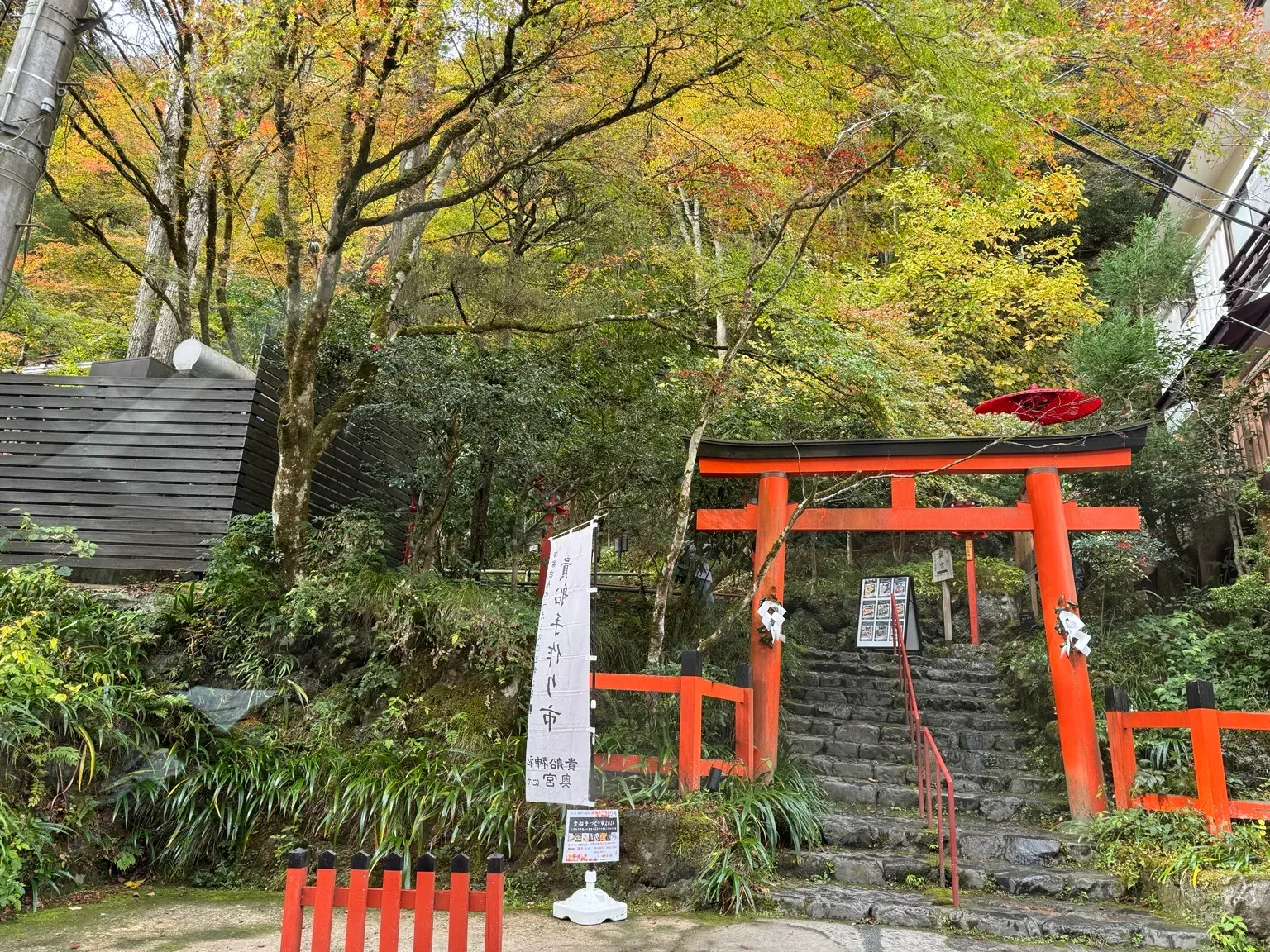
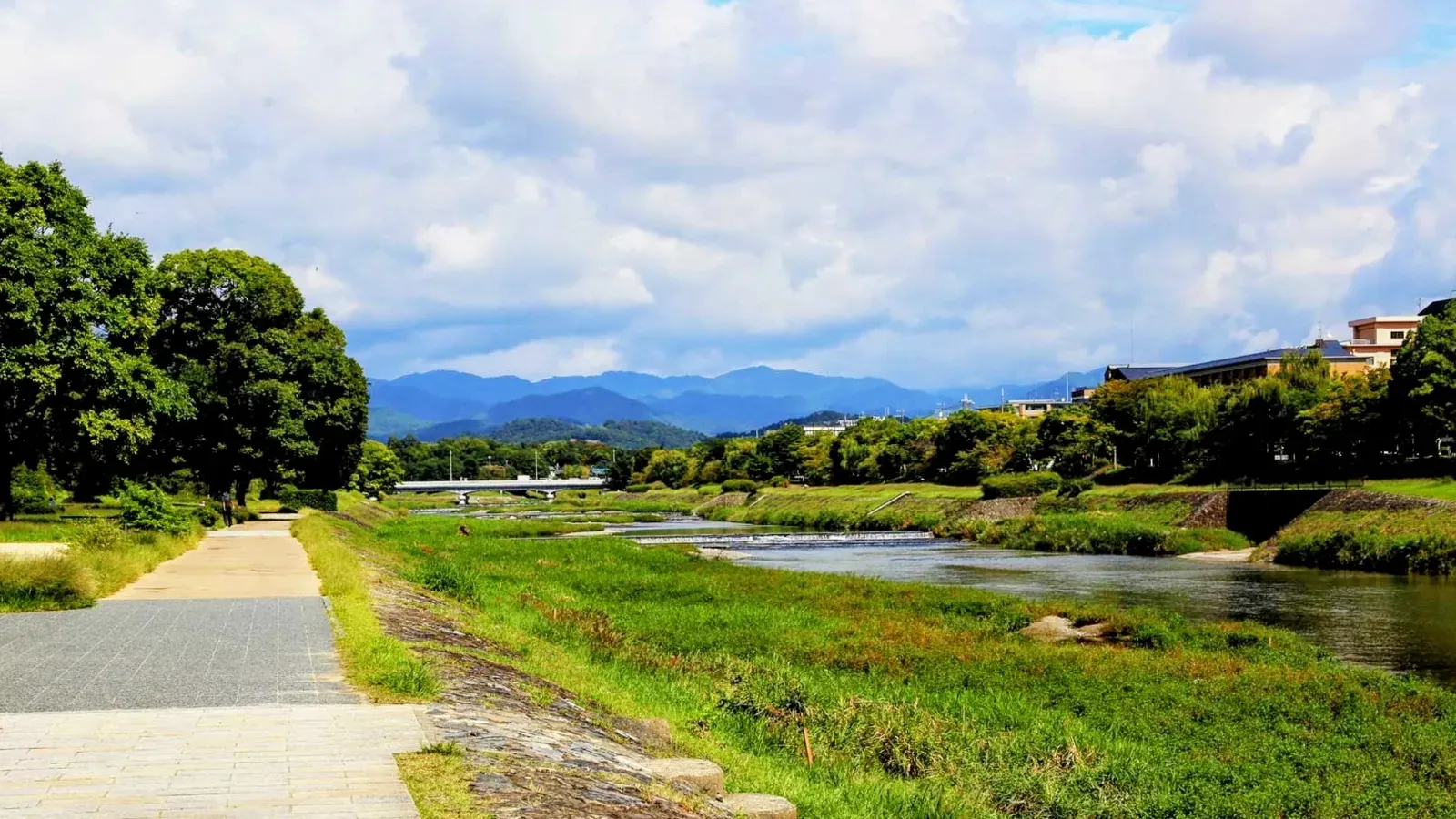
A walk can be about more than reaching the next landmark. A name that catches your eye, or a word you have just learned, can give you a reason to pause and look again.
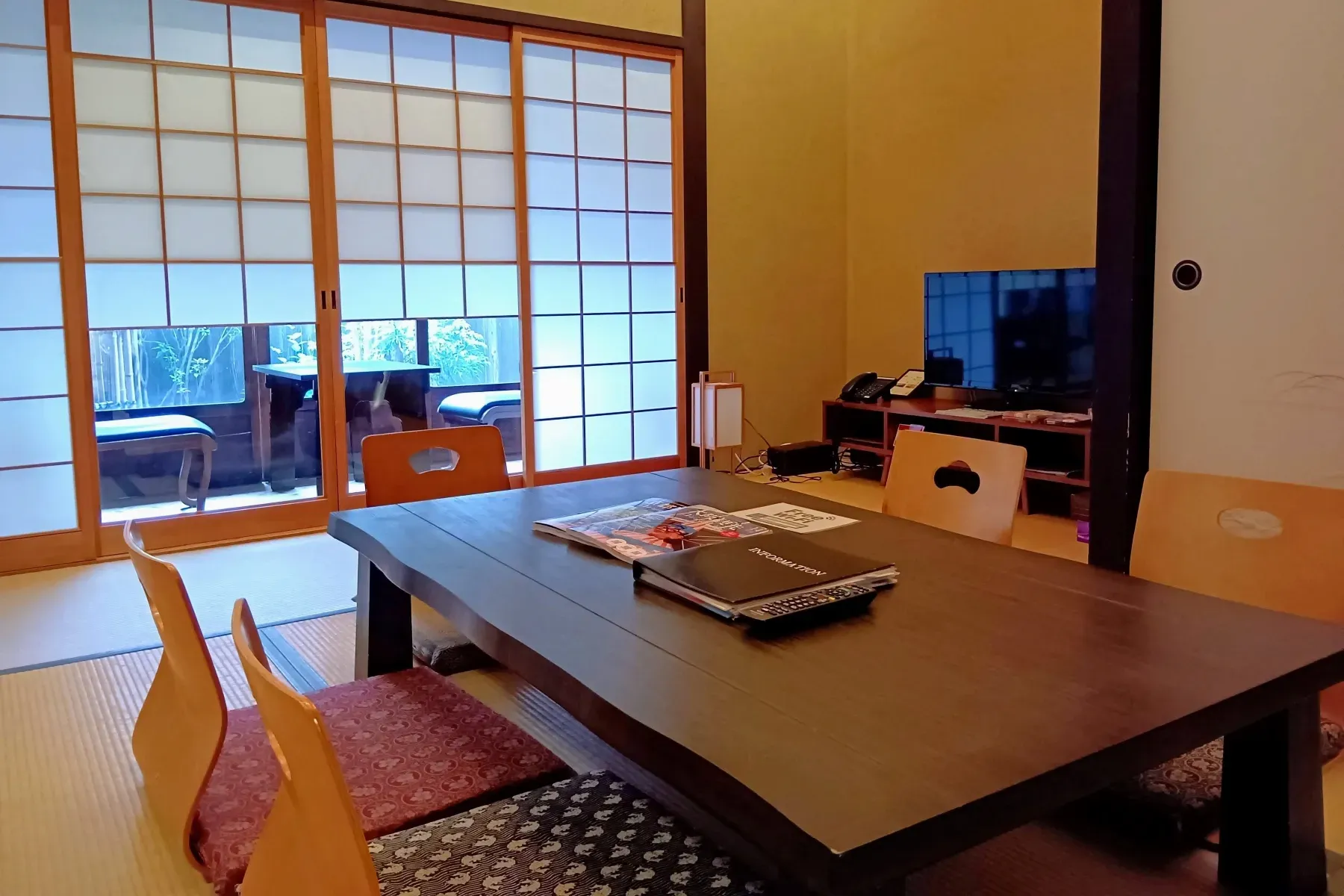
If you are planning a stay, browse our machiya accommodation or read our guide to choosing an area in Kyoto.
Sources and editorial notes
The explanations above draw on the following references; the suggestions for enjoying your visit are our own. The listed authors and organisations have not reviewed or endorsed this article. Sources are in Japanese; English reference titles below are editorial translations.
- Shogakukan, Digital Daijisen: 入洛, via Kotobank—meaning and readings.
- Shogakukan, Digital Daijisen and Seisenban Nihon Kokugo Daijiten: 上洛, via Kotobank—meaning and travel towards the capital.
- Japan Kanji Aptitude Testing Foundation, Kanjipedia: 洛—character meanings and related words.
- Tetsuji Atsuji, Why Does 洛 Represent Kyoto?, Kanji Café, 26 July 2018—Luoyang and Kyoto’s names.
- Kyoto City, Kamigyo Ward: The Formation of Kamigyo—the city’s historical account.
- Masaaki Ueda, Ancient East Asia and the Kyoto Basin, Kyoto Prefecture Archaeological Essays, volume 7, especially printed page 77—development of the naming conventions. English title is an editorial translation.
- Kyoto City: 2025 Kyoto Tourism Survey—a modern use of nyūraku.
- National Diet Library, Collaborative Reference Database: Where Is the Boundary Between Rakuchū and Rakugai?—references on changing geographical usage.
Edited by Machiya Inn Kyoto. Sources checked: 21 October 2026.